ENVT-1107-M01-2025-26 Landscape Design (Term 2 week 12)
- Tyrone Akinnuoye

- Apr 16
- 1 min read
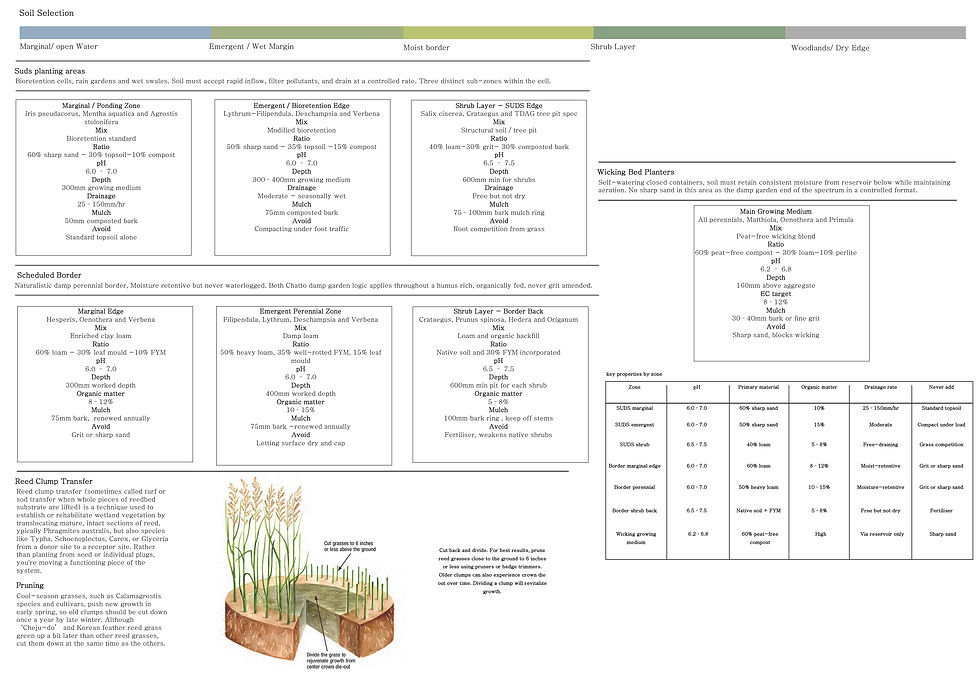
Reed clump transfer is a technique used to establish or rehabilitate wetland vegetation by relocating sections of reed from one site to another instead of starting from seed or small plugs.
There are a number of reasons as to why this technique is used.
One reason is that it works quickly. A mature clump that already has developed roots and shoots means you can get an instant cover, bank stability and a working reedbed in the first season compared to seeds or plugs which take years to catch up.
Reed clump transfer means you can move a whole mini-ecosystem. The clump comes with its soil, seeds, microbes, and small creatures. It rescues reeds from destruction. If a site is going to be built on, the existing reeds can simply be lifted and relocated rather than it being lost.
Transferred clumps create a softer, natural, drifting edges of a wild wetland rather than the tidy rows you normally get from individually planting plugs.
The main downside to clump transfers is the accidental spread of invasive plants or diseases that come along with the clump. In addition, the new site where it is being moved to will need to have similar wetness to the old site as a clump from boggy grounds will not survive somewhere that dries out in the summer.



Comments